MethodThe current practice
I call this method BaliKu, after the island where it was found.
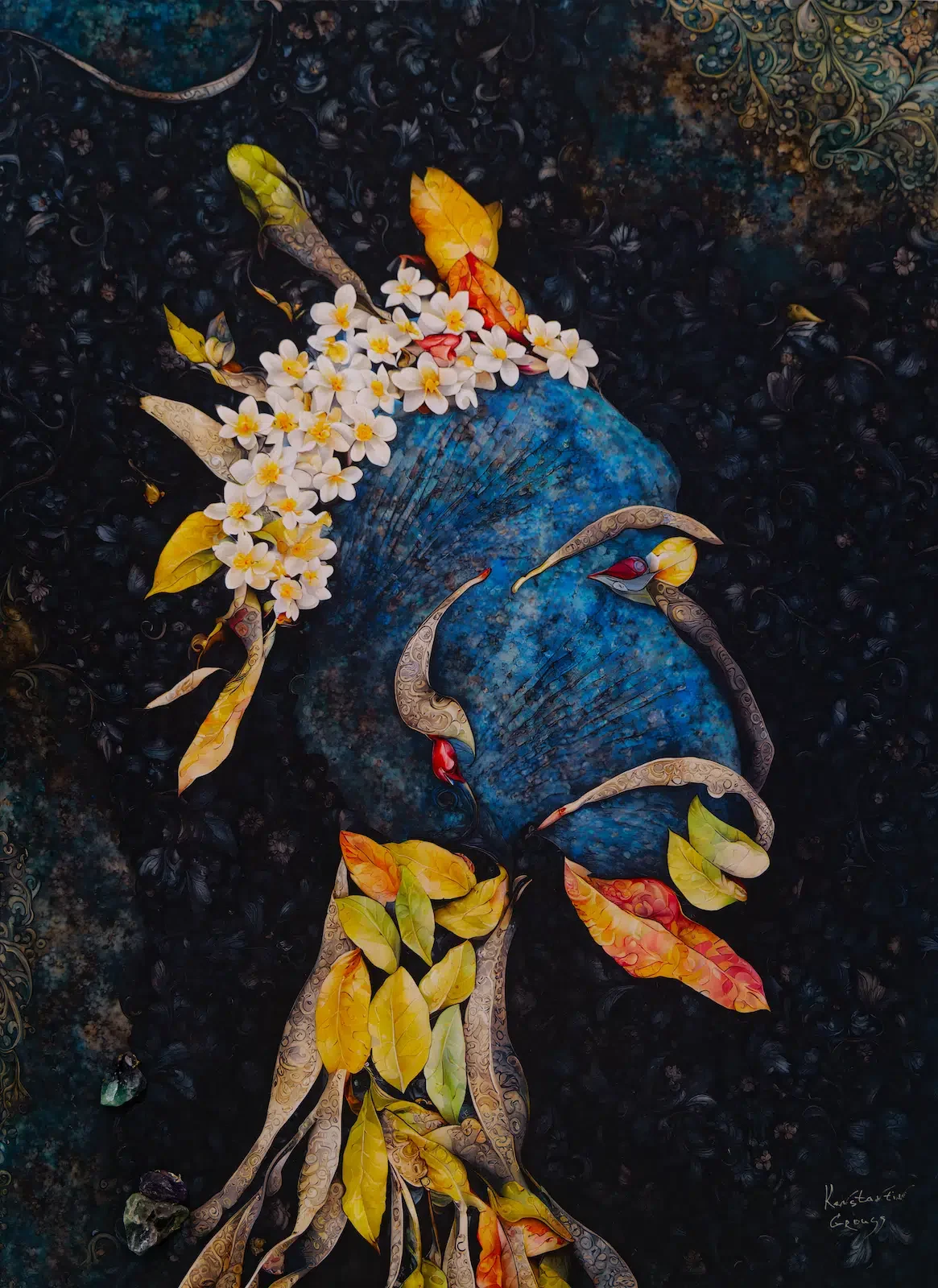
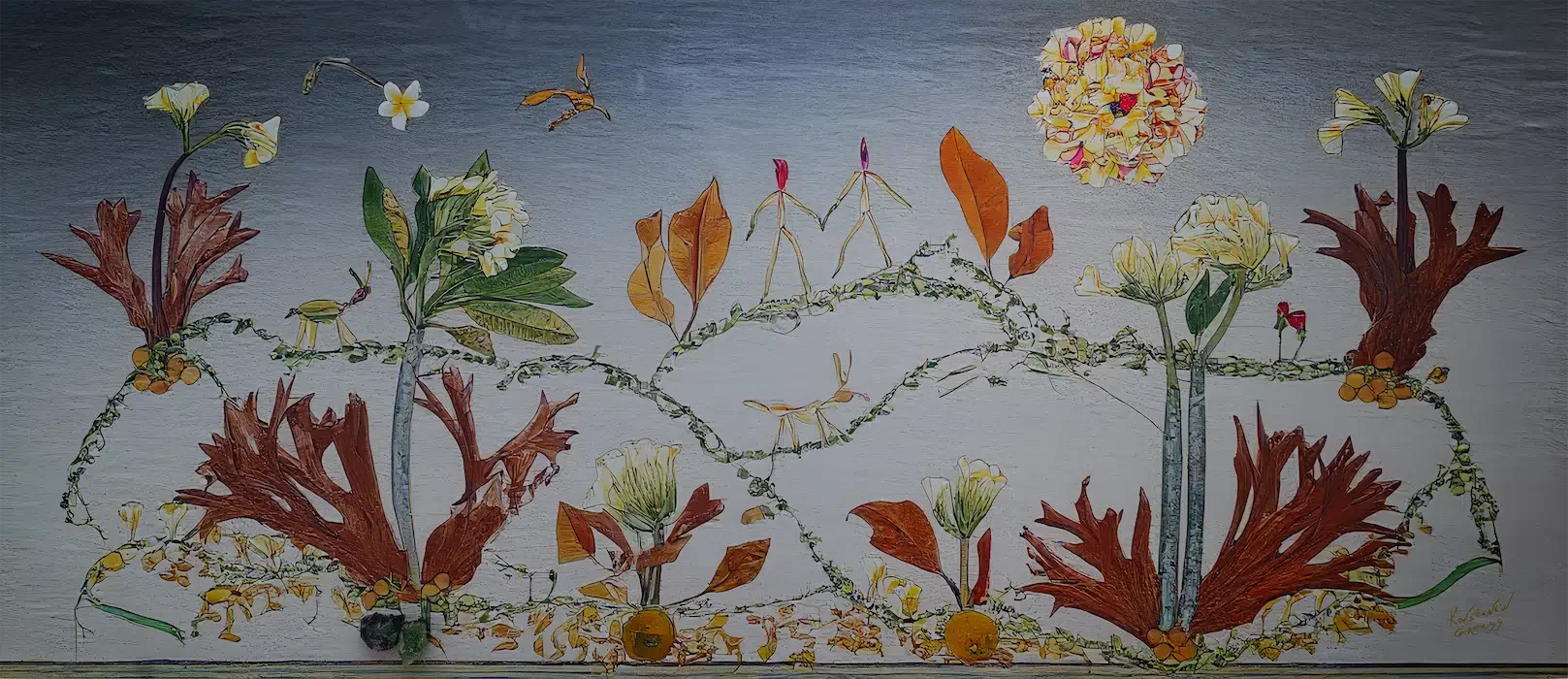
The work begins with organic materials — leaves, flowers, stones, seeds. They are selected for their physical properties: weight, fragility, tension, flexibility. Each composition is assembled by hand, in real space. It exists briefly. Then disappears.
These temporary constellations are not preserved. They are photographed once and allowed to go. The photograph is not the work. It is the last moment at which the composition still exists.
Then the long part. I build the image from it: layer by layer, surface by surface, colour by colour, over months. Nothing is retouched. Something is made. The image does not document the moment. It extends it. What existed briefly becomes a new state.
Each work carries a trace of movement. Balance, rhythm, and suspension pass from the body into still form.
Only when the image is ready do I allow it to return to matter. Silk applied to wood by my own technique. UV print on aluminium and wood. These are not supports, but conditions of perception.
Metal establishes distance.
Wood introduces weight and decision.
Silk allows continuity and breath.
The image adapts to the material. The material reshapes the image.
Then the process gathers. Time, having unfolded through many states, condenses into crystal. For each work I find the stone, and the single place on the surface where it belongs, and fix it there by hand. It is the only element that never entered the digital state. When it is set, the circle closes: what came from the earth is returned to the material world.
The work moves in a cycle:
from living matter -
to composition -
to image -
to material -
to condensation.
It does not end.
Each work is singular. There are no editions.
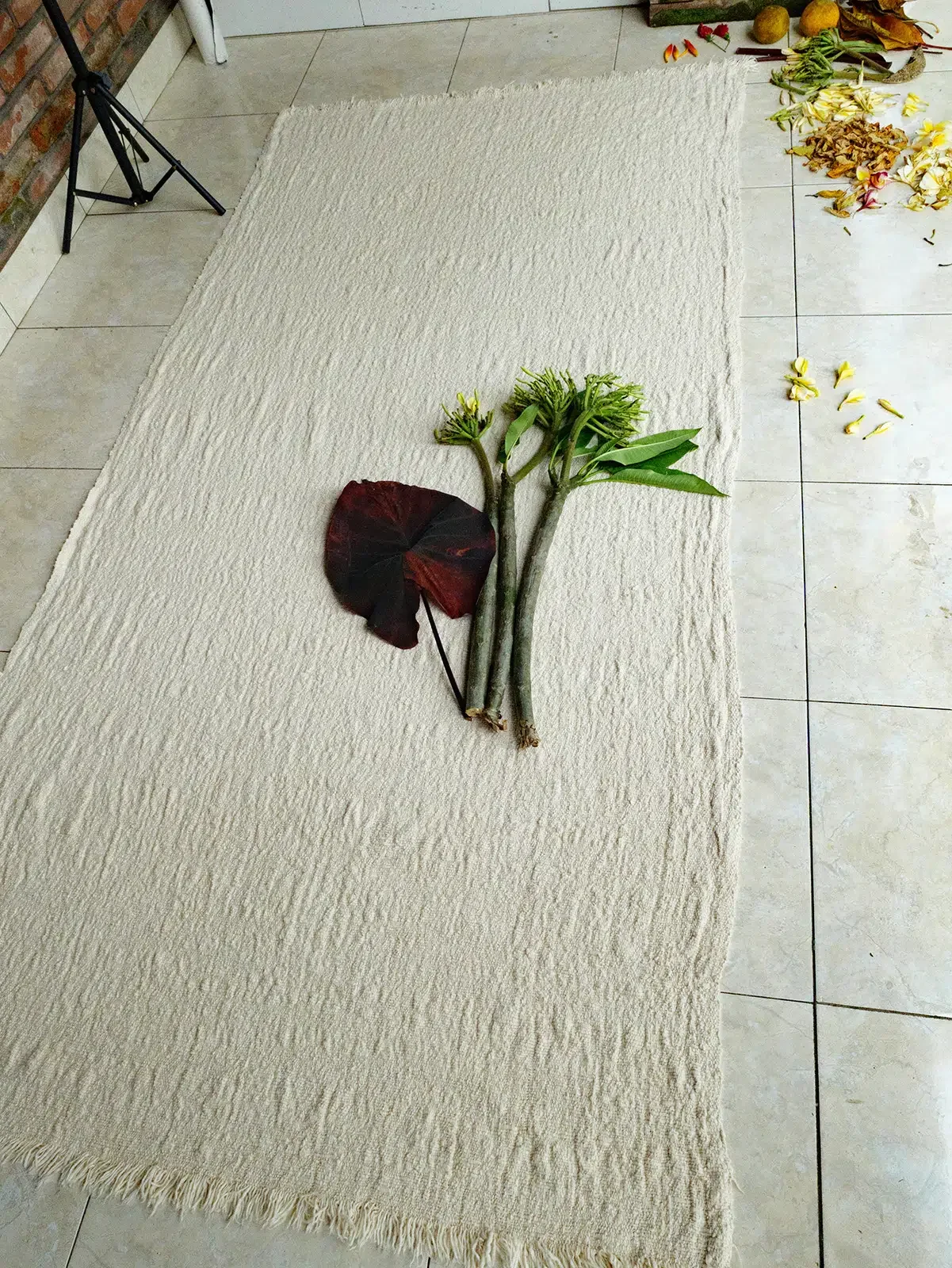
Fragments of composition. Before the image.The PracticeThe Artistic Inquiry
The practice has never belonged to a single medium.
Over more than twenty years it has unfolded through choreography, performance, kinetic sculpture, video, curatorial projects, and now material processes.
The medium changed. The question remained:
How does potential become available without losing its freedom?
Early works — Intuition of Form, Philosophy of Walls — examined how form emerges from movement. Later projects — Phases of the Moon, Cage for Air, No Translations, <at>BODY<dot>MOVE, Inappropriate Texts, Kod Epokhi / Zeitgeist — and the curatorial work turned toward transitions between states, and toward how information travels across media and contexts.
Over time my attention moved away from movement and toward what happens between forms: the conditions under which something appears, changes, and disappears.
Aristotle's entelechy — the passage from potential into actuality — accompanied the early work and still holds. The work no longer represents movement. It observes one state becoming another.
Two kinds of time run through this. One is the life, which follows its timeline and its rules. The other is the work, where time is uneven, where a single question stays open across twenty years, and events, places and materials arrange themselves around it.
Extended Moment, made in Bali by the method I call BaliKu, carries this into matter. A composition of living material passes out of its own time, through a long digital state, and returns fixed. The crystal set at the end is the point where potential becomes actual and stops moving. That is the oldest question in the practice, held in a stone rather than in a sentence.
I do not treat media as separate disciplines, but as different conditions through which the same question continues.
The work does not seek conclusions. It stays with transformation: with intervals, translations, and the moment form appears.
Konstantin Grouss. Personal signThe PracticeThe Practice development
The current work grows from more than two decades of interdisciplinary artistic practice moved through the body and spanning
choreography, performance, kinetic sculpture.
Today the same inquiry continues through materials.
Movement once revealed time.
Stillness now reveals duration.
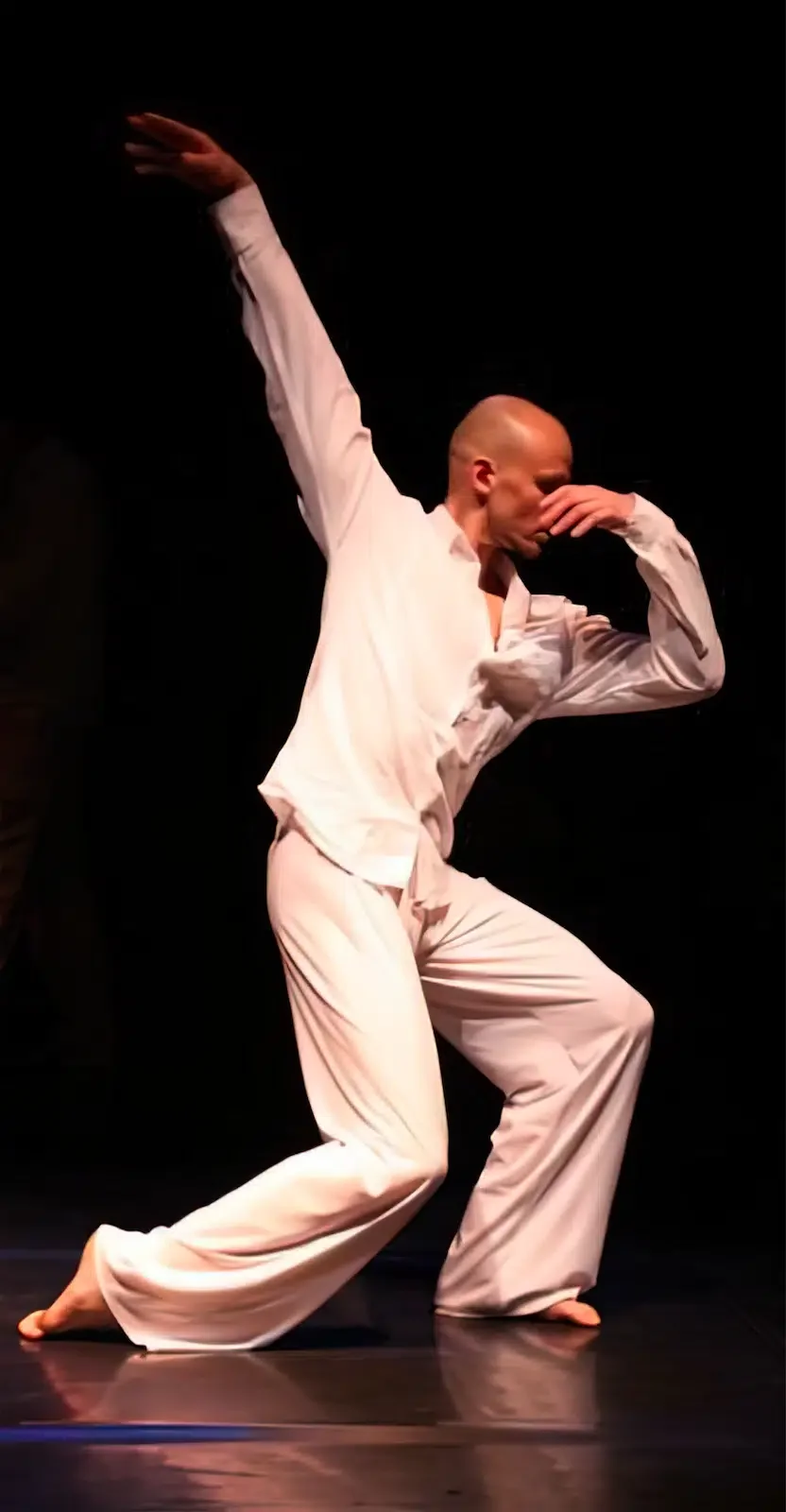
Konstantin Grouss. "Phases of the Moon". Contemporary dance piece. 2008Dance
↓
Extended Moment
The body discovered this language first.
The material remembers it now.
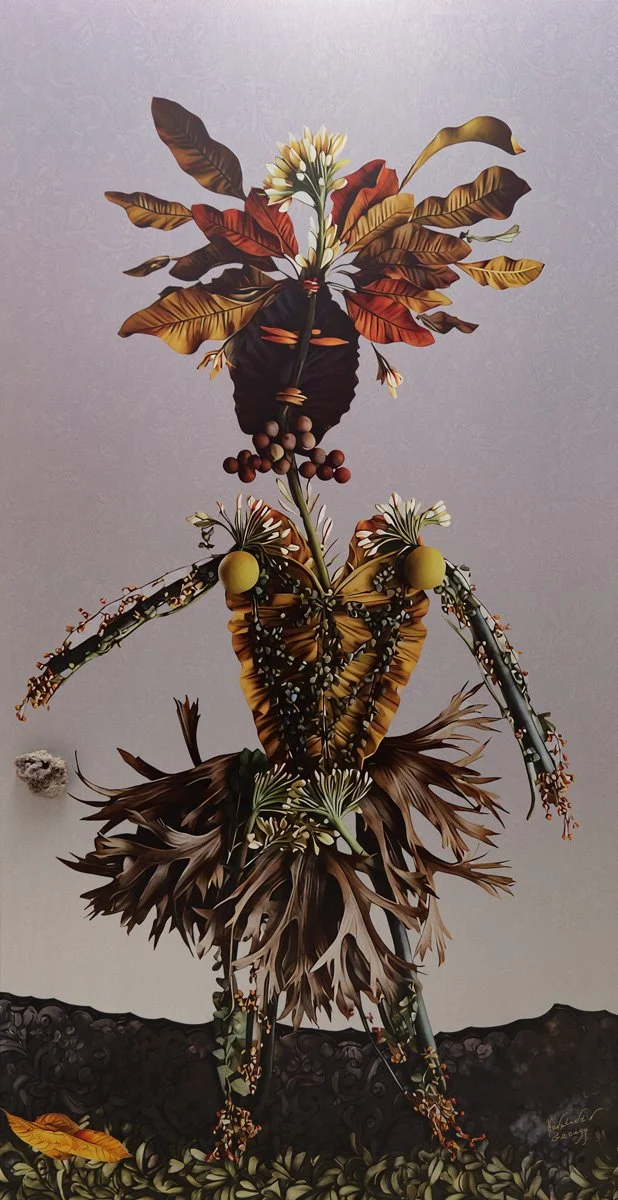
"Shaman In the Garden, 2025The Practice development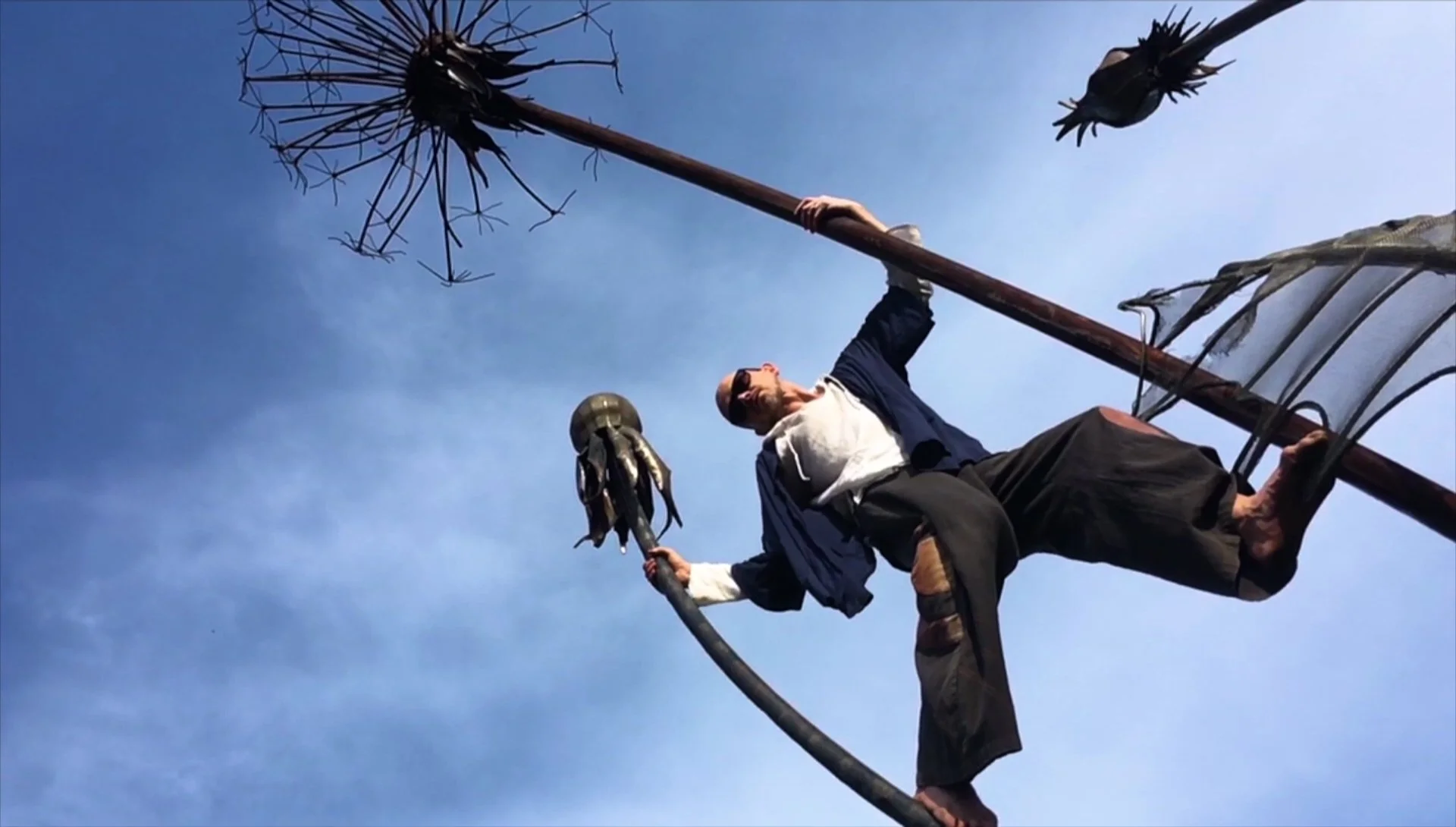
Konstantin Grouss. "Poem at War / Dandelion Time". Video. 2020Video
↓
Extended Moment
Movement once revealed time.
Stillness now reveals duration.
"This Is the Right Side", 2024The Practice development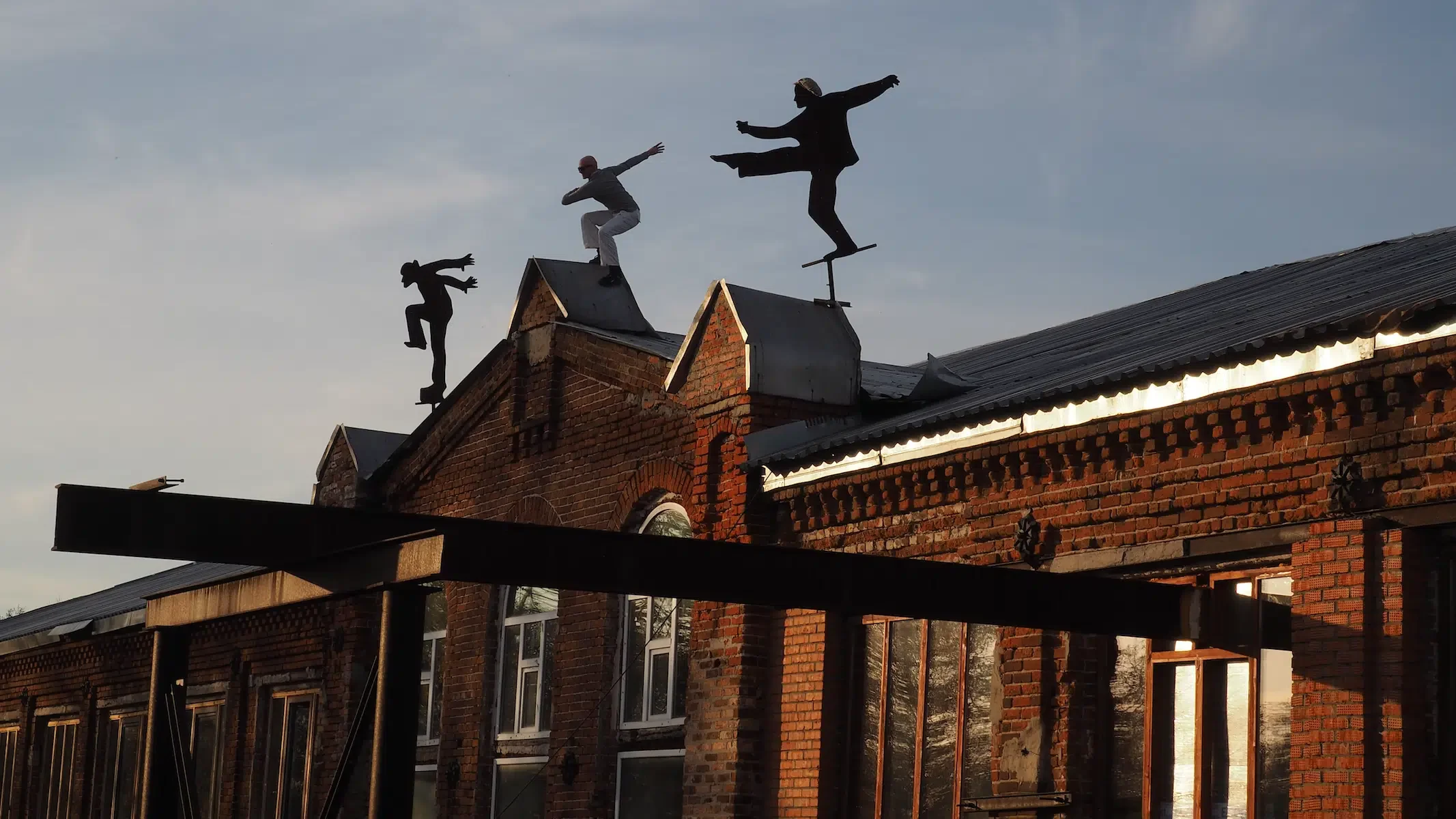
"Konstantin Grouss. Absolute synchronicity. Sculpture", 2015Sculpture
↓
Extended Moment
Sculpture gave movement weight.
Materials gave duration form.
"Come Together", 2025More about the Practice